Expertise
Maintenance-free green walls: what to choose
Maintenance-free green wall: preserved, artificial or living? Real differences, lifespan and how to spot genuine foliage.
"A green wall, yes, but with no upkeep." It is the most common request reaching the atelier. Behind that phrase sit three very different products, preserved, artificial and living, with different looks, different lifespans and different levels of honesty. After more than 1,200 projects since 2008, here is how to tell them apart and choose without regret.
What does "maintenance-free" actually mean?
On the market the phrase covers two opposite realities. Either the greenery is real but preserved, genuine plants whose sap has been replaced by a plant-based glycerine solution, locking in their freshness. Or it is artificial, moulded plastic imitating a leaf. Neither needs water or light, but one is still botanical and the other is not.
The distinction is not cosmetic. It decides the texture, the way the wall ages, the perceived value of your space, and what visitors feel when they step within a foot of it.
Preserved green walls: real plants, zero watering
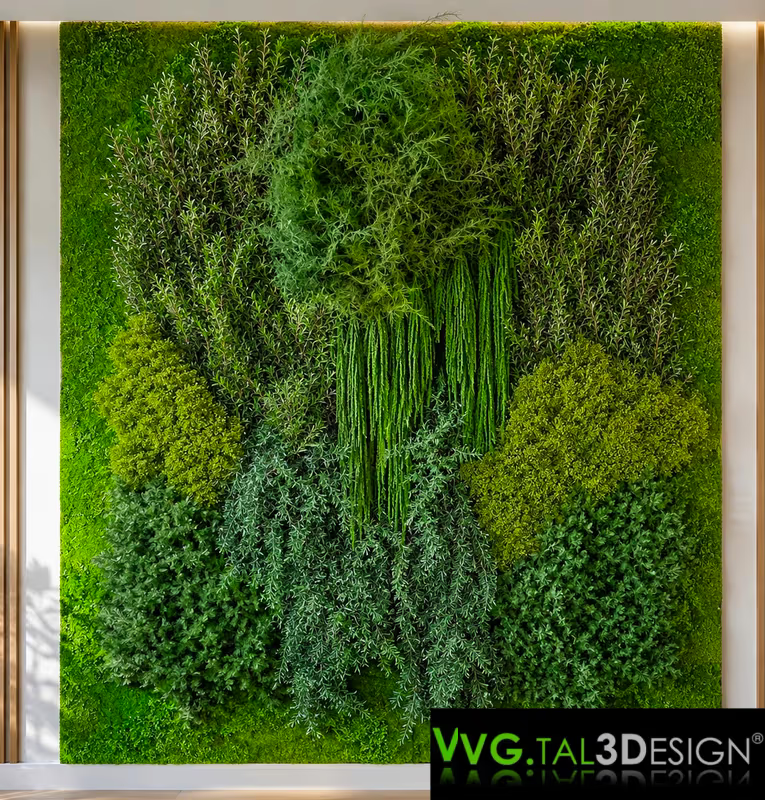
Preserved greenery is the atelier's answer to the "no upkeep" brief. Real mosses, real foliage, real plants, harvested and then preserved. The result needs no watering, no light, no irrigation and no electricity. A light dusting once or twice a year is enough. This is our Nature range.
Indoors, a well-built preserved wall holds its appearance for 8 to 10 years. Its limits are known and easy to respect: no direct UV, no sustained humidity below 40%, and no exposed outdoor use. Within those conditions, it simply does not move.
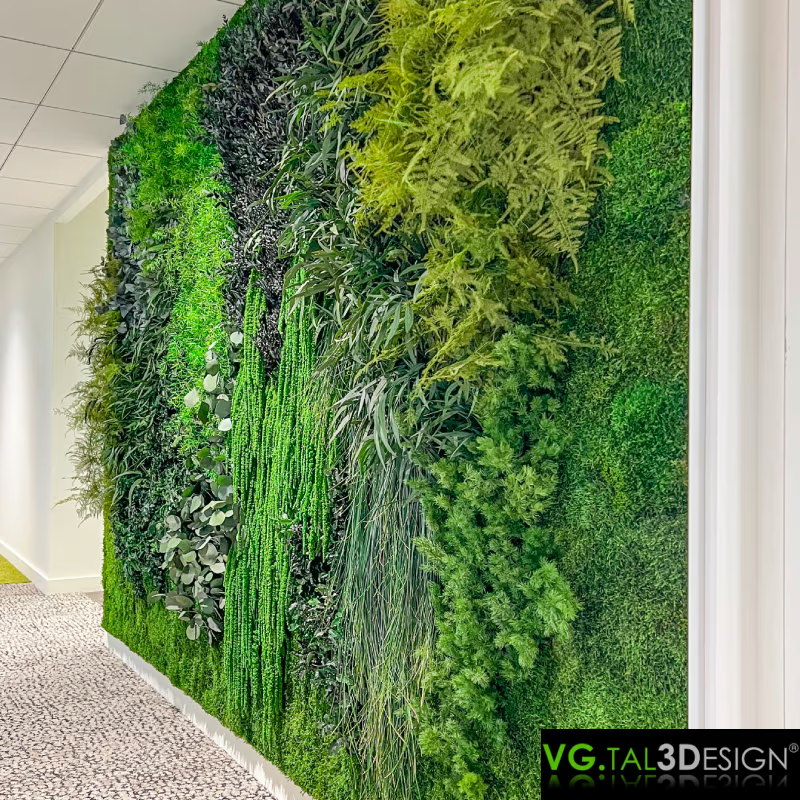
Bespoke preserved plant mural, offices in Lille.
View projectArtificial green walls: the easy route, and its cost
Artificial is cheaper and goes anywhere, including outdoors in full sun. That is its only genuine advantage. In exchange: no credible texture up close, a plastic sheen that gives the material away under direct lighting, progressive UV fading, and zero sensory benefit. In a high-end welcoming space, hotel, headquarters, showroom, the effect often works against the very image you set out to build.
We do not make them. Not out of dogma, but because a client who comes for greenery wants greenery: the disappointment lands with the first visitor who touches the wall.
Living green walls: upkeep as the trade-off
At the opposite end, a living green wall is an irrigated ecosystem: it grows, genuinely purifies the air and shifts with the seasons. It needs light, automatic irrigation and a regular maintenance visit. So it is not a "maintenance-free" solution, but it is the only truly living one, and the only one that measurably improves air quality.
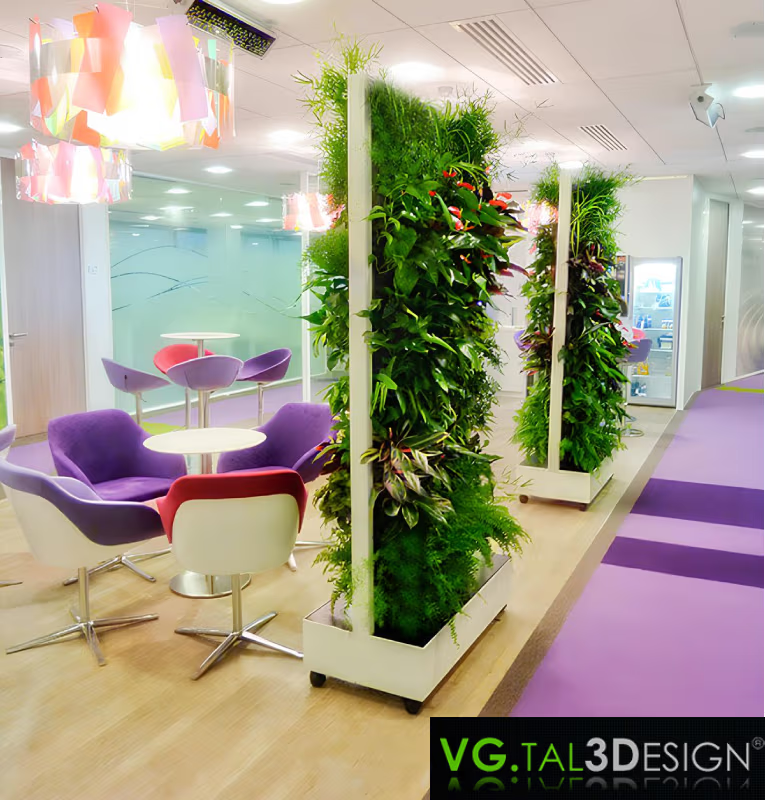
Living green partition, offices in Paris.
View projectSide by side: the three solutions
| Preserved | Artificial | Living | |
|---|---|---|---|
| Real plants | Yes | No (plastic) | Yes |
| Watering | None | None | Auto irrigation |
| Light required | No | No | Yes |
| Upkeep | Dusting 1 to 2×/year | Dusting | Regular visit |
| Purifies air | No | No | Yes |
| Indoor lifespan | 8 to 10 years | UV fading | Unlimited if maintained |
How to spot a genuine preserved green wall
Four simple checks before signing a quote:
- Touch it: preserved foliage is supple and slightly cool; plastic is rigid and sounds hollow.
- Look closely: real greenery never has two rigorously identical leaves.
- Watch the sheen: an artificial leaf reflects light uniformly.
- Ask where the plants come from and how they were preserved: a serious atelier answers straight away.
Which solution for which space?
In offices, retail or restaurants, often dim, heavily used rooms, preserved solves the problem with no technical constraint. In an atrium, a glazed lobby or a bright space with an operating budget, living comes into its own. Our projects show both cases; the indoor green wall guide breaks the choice down room by room.
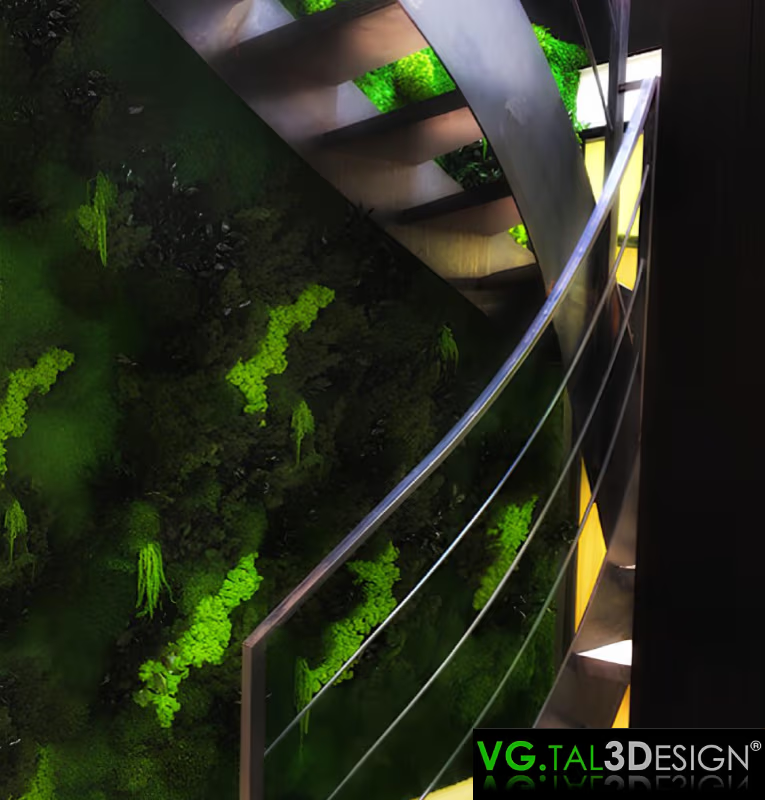
Offices greened with preserved foliage, Paris.
View projectFrequently asked questions
Do maintenance-free green walls really exist?
Yes, as long as we are talking about preserved greenery. Real preserved plants need no water, no light and no irrigation: only a light dusting once or twice a year. A living wall requires regular upkeep, no honest professional will sell it as "maintenance-free".
What is the difference between preserved and artificial?
Preserved is real greenery whose sap has been replaced by a glycerine-based solution: texture, tonal variation and natural irregularities are kept. Artificial is moulded plastic. From across a room the difference is subtle; from a metre away it is obvious.
How long does a preserved green wall last?
Indoors, expect 8 to 10 years of stable appearance. Longevity rests on two simple conditions: avoid direct, prolonged UV exposure, and keep ambient humidity above 40%.
Does preserved greenery purify the air?
No. Preserved plants are no longer biologically active, so they do not clean the air. They deliver visual comfort, acoustic absorption and the presence of real greenery. For a measurable effect on air quality you need a living wall.
Can a preserved wall go in a damp room?
In a ventilated bathroom, yes, we install them regularly. What must be avoided is direct contact with water and permanently steam-saturated rooms such as a hammam, where the moss would eventually take on moisture.
Have a project in mind? Tell us about your wall: we study the substrate, the light and the use before recommending a technique, never the other way round.
Ready to start your project?
Whether you are a business or a private client, our team is ready to support you in designing your custom plant installation.
Get a free quotePersonalised response within 48h · No-obligation quote